The frustration of a dead battery will be familiar to every iPhone owner. But what can you do to avoid it, other than use your phone less?
Apple is good at squeezing maximum performance out of the hardware in the iPhone and that's one of the reasons that the iPhone's battery is comparatively small. The first iPhone had a 1400mAh battery, and seven years later the iPhone 6 has a 1810mAh battery, although the iPhone 6 Plus has a whopping 2910mAh offering.
Many of the current Android flagships have batteries rated over 3000mAh, but then they have much bigger displays - the 6 Plus aside, of course. But that doesn't mean we still don't struggle to keep our iPhones going for longer, no matter how big the battery pack.
Until the next big leap in battery or charging technology comes along, we'll have to rely on smarts to get the most out of our iPhones. Here are a few simple tips you can follow to get a whole lot more juice from your Apple smartphone.
1. Keep an eye on signal strength
The biggest culprit for rapid battery drain is often a weak signal, but there isn't a great deal you can do about that. If you're in an area with a poor signal then you might consider switching Airplane mode on, which stops the constant searching that sucks the life from your phone.
You should also always use Wi-Fi instead of cellular data whenever possible too, as that offers a more stable connection and will stop all that battery-abusing searching for a signal.
2. Turn off app notifications
Some apps will spam you with pointless news. How many of the notifications you get do you actually want to see? In most cases, very few.
Every one of them is sucking down some battery life, so cut them off at the source. Go to settings > notification centre and tap on any apps you don't want notifications from. Then choose 'none' under the alert style, and turn 'badge icon' and 'sounds' off.
Use WiFi wherever possible, turn off notifications and check your settings
3. Change display settings
Your display is costly to power, so you want it to shut down quickly when you aren't using it.
Go to Settings > General > Auto-lock and see if you can live with a shorter time before the screen auto-locks.
You should also head to Settings > Wallpaper & brightness and turn 'Auto-brightness' off to save some battery. Set the brightness as low as you can and only adjust it up when needed and you'll save a decent chunk of power – although this might mean you can't always see your phone screen in direct sunlight.
4. Stop the animations
You don't need dynamic backgrounds and parallax, '3D' effects. They're fun but they're munching your power. Pick a static image or a favourite photo in Settings > Wallpapers & Brightness, then choose 'Wallpaper' and turn 'Reduce Motion' on in Settings > General > Accessibility.
5. Reduce background refreshing
People imagine that swiping apps closed in the multitasking menu is saving power, but you really need to be taking a look in Settings > General > Background App refresh to really make a difference.
Allowing apps to refresh themselves like this is a big drain on your battery. Go down the list and turn off everything you don't need - Facebook in particular can drain your battery really quickly. These apps still refresh when you actually load them up, which is a lot more efficient for your battery.
Stop background refreshing, get your email manually and check your location settings
6. Get email manually
There's some argument about the benefits of push email (arriving when sent) versus fetch (the phone checks at pre-agreed intervals), and it really depends on how much email you get and how often you have it syncing.
Push should only send from the server when a mail comes in, and it will be more power efficient than checking every five minutes with fetch, but if you get a lot of email then push could drain the battery faster than fetch with a slower refresh time of an hour.
Assuming you're only going to check your email once every couple of hours, getting it manually is going to save you power over both options… but you'll have to actually remember to do it!
According to a report posted on Stabley Times, we can expect an iPhone 6S and iPhone 7 to be released in the next calendar year. So unfortunately your new iPhone 6 may be superseded sooner than you (and us!) expected.
We have been aware of rumours recently that Apple was planning to ditch the ‘S’ device version altogether, which this latest rumour appears to have debunked. Why so soon with the new devices though?
iPhone 6S to combat growing Android market
There is no hiding behind it, Android has been selling (or at least shipping) a larger volume of handsets than Apple has been in previous quarters. It is widely thought that this move by Apple to release two handsets in one year is geared towards combating an Android saturated marketplace. Another key consideration appears to be the decreasing time that consumers are on contracts for.
Previously consumers weren’t spoilt for choice with contract lengths, but now on various networks around the world (such as Verizon and AT&T), consumers are now open to shorter contract options with carriers allowing customers to upgrade to new handsets more frequently.
iPhone 6S in an iWatch bundle?
One of the more certain releases of next year is the impending iWatch. Being a peripheral device that requires an iPhone to pair with, it would make perfect sense for Apple to release this with a new handset (or an improved handset in the iPhone 6S). As for the 6S, we really are at the start of the rumour mill for this so be sure to follow us on Twitter to keep up to date as more information emerges but we have a clearer idea at this stage of what could be the makings of the iPhone 7.
What could the iPhone 7 include?
Well, this is where it get’s interesting. From the latest information, this is definitely a premium quality handset that we have come to expect from Apple. If no other information comes to light (which would surprise us immensely) you can expect the iPhone 7 to include:
a 21MP rear camera (described as an SLR-like camera)
Similar Sapphire display as rumoured with the 6S
Quad-core A8 chipset
Internal storage of 256GB
Facial recognition technology
Could it also be shatter-proof? Apple was recently awarded a patent for a new protection system that uses a motion sensor, processor and internal motor to detect when a device has been dropped, and reorient itself to protect the screen and camera. Sounds a bit space age, but let’s wait and see!
When can you expect to buy the 6S and the 7?
This is still very much in the early days but our gut feeling is that 2015 will be a big year for Apple with the iPhone 6S release rumoured around spring and then the iPhone 7 in September. If these rumours develop further (which we are sure they will) then next year we can definitely expect the iWatch, potentially see the release of a rumoured 12.2″ iPad Plus and two new premium handsets.
What are your thoughts on this? Are Apple getting it right, or wrong with the pace at which they are releasing new devices?
At this point in the game, we don’t know whether Apple will be releasing the iPhone 7 in 2015 or whether it will follow its usual conventions and call next year’s flagship the iPhone 6s. But based on recent rumors on the device, we may be seeing Apple stick to its guns and release a phone known as the iPhone 6S.
According to Focus Taiwan, Apple’s next flagship phone will be called the iPhone 6s,
while its larger variant would go by the name iPhone 6S Plus. But what’s most interesting about this report, at least on a business standpoint, is how the purported 4.7-inch iPhone 6S may be the first where Apple partner Pegatron would shoulder more than half of the load when it comes to manufacturing. There also appears to be a good chance Pegatron will end up manufacturing most iPhone 6S Plus units as well.
Separately, another recent report claims that there won’t be just two iPhone 6S/iPhone 7 variants in 2015, but three. Citing Apple’s Chinese supply chain partners, GforGames reported late last week that Apple may be releasing a 4-inch iPhone in the second half of next year, with the main target market being female device owners. The device may also be targeted toward users who put a premium on one-handed usability, which was a key selling point for the iPhone before this year’s larger iPhone 6 and 6 Plus arrived.
Rumors on the iPhone 6S/iPhone 7’s specifications and features are still comparatively scant, due to the iPhone 6 and 6 Plus being less than three months removed from their release dates. But if we are to speculate about the phone’s fundamentals, we can expect display sizes to remain the same. We can also look forward to Apple remaining bullish on an 8-megapixel sensor for the rear camera – after all, Apple wants to sell actual camera performance, rather than on-paper megapixel counts. iOS 9 is sure to debut on the iPhone 6S, 6S Plus, and the rumored 4-inch variant.
While Touch ID was the big addition on 2013’s iPhone 5s, next year’s phones’ big “party trick,” as we told you last week, may be the presence of anti-drop technology. This technology, according to a recent patent, “(moves) the mass in the protective mechanism in response to detecting the free fall” of the phone.
Apple may be forced to wait until 2015 to launch the iPhone 6 and iPhone 6 Plus in China, according to a report in 21st Century Business Herald [Google Translate]. If true, the delay could have consequences for the company both in terms of customer momentum in the critical Chinese market and overall earnings projections.
Sources with knowledge of the situation told 21st Century Business Herald that Apple's latest iPhone models have failed to receive the necessary approval from the Ministry of Industry and Information Technology (MIIT). This certification is required for Apple to begin selling the iPhone in the Asian country. A re-application date for approval has not been determined, leaving Apple's Chinese iPhone 6 debut uncertain.
Apple unveiled the iPhone last week, announcing launch dates of September 19 for its first wave of markets and September 26 for a second wave of countries. Noticeably absent from either list was China, which is a region of significant growth for Apple. For the past year, Apple consistently has reported increased revenue growth from China, with plans to double its retail footprint and build out its channels in the coming years. Apple last year touted its progress in China, with the company having worked hard to ensure the iPhone 5s and 5c launched in the first group of countries.
Initially, this year's China delay may impact Apple's important holiday quarter and affect its stock price over the coming months as the iPhone 6 and 6 Plus expand to other countries except China. Demand for the iPhone 6 in China is high, with carriers having prematurely accepted pre-orders of the phone ahead of Apple's announcement.
Due to such demand, Apple will have to battle the gray market in which resellers purchase iPhone 6 units in other countries, import them into mainland China and then sell the phones to wealthy Chinese consumers at exorbitant prices. iPhone 6 models already have started to appear in China ahead of this week's global launch.
Over the long term, the delay may have a beneficial effect on subsequent quarters, which usually show a decline in iPhone sales and company revenue. If Apple were to launch the iPhone 6 and 6 Plus in January 2015, the company may forestall this slump due to a spike in sales from Chinese consumers.
This delay also may help Apple balance supply and demand of the iPhone, which is selling out quickly in the regions that are currently accepting pre-orders. A 2015 launch would help Apple meet the current demand and ensure it has ample supply for a major Chinese launch at the beginning of next year.
Apple's iPhone 6 and 6 Plus go on sale this week starting Friday, September 19 in the US, Australia, Canada, France, Germany, Hong Kong, Japan, Puerto Rico, Singapore and the UK. A second round of sales will begin September 26 in 20 additional markets, including Austria, Belgium, Denmark, Finland, Ireland, and more. Contract pricing starts at $199 for the 16 GB iPhone 6 and $299 for the larger 16 GB iPhone 6 Plus.
If you’re thinking of selling your current iPhone to save a buck on your upgrade to the new iPhone 6, think again. There’s a rumor flying around suggesting that the high-end version of the phone could reach a price point of up to $1,000/€1,000.
Pacific Crest Securities analyst Andy Hargreaves rose Apple to “outperform” with a $635 (€458) price target on its stock, boosting it several points in trading this week.
The reason? “...he believes the next iPhone, which he calls the iPhone 6, could be priced higher than the iPhone 5s, and return growth to Apple in fiscal 2015,” reports The Street.
Sold with a two-year contract, the iPhone 6 should cost $299 (€215), because of the new technologies inside it, including the newer processor, the bigger screen, the sapphire covering its display, and the potentially more expensive chassis, among other things.
Unlocked, a 64GB iPhone 5s today costs $849 in the States and €899 across Europe. Add another hundred to the mix and what you get is an iPhone 6 that would theoretically retail for almost $1,000, or exactly €1,000 if you live in Europe.
And if you consider the possibility of Apple doubling the storage capacity on the high-end iPhone 6 to 128GB of Flash memory, those figures start to sound even less like fiction.
Hargreaves wrote in a research note handed to investors, “We believe Apple can sell a 4.7" iPhone at a subsidized price of $299, which should generate incremental gross profit on replacement sales and attract new customers that had previously purchased Android phones specifically for a larger screen.”
However, there’s no reason to be alarmed just yet. Even when faced with high costs for manufacturing, research and development (R&D), and new materials, Apple usually pulls a rabbit out of its hat and manages to keep the sweet-spot price of $199 (€144) for the entry-level (16GB) models on contract.
Phones with more storage capacity typically have another hundred dollars/euros added to their bill, but that’s normal.
On the other hand, Android phones with huge screens (Galaxy Note 3) already sell for the amount cited by Hargreaves, which gives Apple an excuse to do the same. After all, profits are one of the top priorities for any big corporation, and as much as Apple loves to please the customer, it is also compelled to generate a handsome bottom line for every executive, director, and shareholder invested in the company.
KGI Securities analyst Ming-Chi Kuo, who has provided accurate Apple product information in the past (timing aside), has released a new research note predicting that supply constraints on key components may result in a serious delay in the release of the larger iPhone 6 model with a 5.5-inch display. According to the note, issues with the in-cell touch panel and coloring of the device could push the launch of the device back to a post-October date, possibly as late as next year:
We think the 5.5-inch model will also have issues with the yield rate of in-cell touch panel and color unevenness of metal casing. Indeed, these problems will likely be even more complicated with a larger size. In addition, from a technical perspective, we don’t expect sapphire cover, used for the first time on the 5.5-inch model, will easily pass the drop test near term. We are conservative about 5.5-inch iPhone launching by end-2014. Even if the product is launched in 2014, it is likely to take place after mid-4Q14, which is later than the September-October of consensus, with shipments being lower than consensus of 15- 20mn units.
The report goes on to note that the phone’s sapphire display (which we’ve seen recently in a scratch test video) may not prove sturdy enough in drop tests to go to market yet. Kuo recently noted that the upcoming iWatch, which will also use a sapphire crystal display, will enter mass production in November. Kuo predicts that when the larger iPhone 6 finally ships, fewer than 15-20 million units will be available.
Analysts and high-profile outlets like The Wall Street Journal are expecting not one, but two new iPhones this year, each outfitted with a display significantly larger than the current four-inch iPhone 5/5s/5c. The Japanese magazine Mac Fan claimed in a report last October that the iPhone 6 will be the first phablet on the market optimized for one-hand operation.
A month earlier, analyst Ming Chi-Kuo opined that Apple would want to honor its self-imposed “unwavering principle of one hand use”. But how does one make a five-inch iPhablet optimized for one-hand use? By dropping the side bezels, that’s how…
The Korea Herald writes that next big things from both Samsung and Apple will feature a “bezel-free” screen. Apparently, Apple’s next iPhone is “sporting a bezel-less screen that features a fingerprint scanner”.
Removing the side bezels would involve switching to a new panel technology.
Instead of using four layers, a bezel-free screen would use a single-layered panel. Not only would this allow for a thinner device, but also for clearer images and improved energy efficiency, people in the know told the publication.
The Korea Hearld report also states that Samsung’s Galaxy S5 – which is up for an announcement at the firm’s Unpacked 5 event at Mobile World Congress next month – will be even slimmer than the S4.
The S5 will also adopt bezel-free appearance and support fingerprint scanning.
An industry source said Samsung Electronics’ Galaxy S5 would sport a display without a bezel, or the rim surrounding a screen, and allow users to scan their fingerprints at the bottom of the smartphone screen.
The phone will also eliminate the home button hardware featured on the previous Galaxy models, he said.
The Samsung device will feature fingerprint scanning technology on the bottom left and right sides. Scanning fingerprints on the entire screen will be allegedly available “in the latter half of this year” as Samsung needs more time to work out the technological kinks.
A report this morning from DigiTimes said that Apple’s supplier Taiwan Semiconductor Manufacturing Company (TSMC) plans to use its the same eight-inch process to make Touch ID sensors for the next iPhone rather than switch to a more modern twelve-inch fab (as previously reported) as Apple wants to avoid any yield issues with the handset.
Bloomberg wrote last October that the upcoming iPhones have larger displays “with glass that curves downward at the edges”. Contradicting Bloomberg, The Wall Street Journal said last month that the new iPhones won’t have curved-screens.
Should Apple adopt bezel-free design, the edges of the screen could be curved like on the Lumias to allow for easier swiping with less friction.
Apple is also though to tap its new sapphire crystal plant in Mesa, Arizona to build thin 1mm sapphire layers which could be fused to glass cover to allow for a scratch-prone screen that’s virtually unbreakable.
We’ve heard some rumors on the next iPhone 6 which is expected to be released by Apple in 2014. There are some new predictions on this iOS smartphone and its features. Here is what some experts hope to see the next year.
Firstly, the device might get two display size models, better power specifications and awesome cam options. Most of the talks right now are devoted to what features fans of Apple smartphones would love to see in the next generation handset.
We are all used to Apple’s iPhone update cycle so we expect to see the next model somewhere in 2014. Different analysts speak of different iPhone 6 release dates. Some mention June. Others speak of late September just like it happened with current models 5S and 5c.
Will we see two new iPhone modes the next calendar year? Apple is more than willing to offer more ideas to its customers. Colorful iPhone 5c and powerful iPhone 5S have proved this. The WSJ, Bloomberg and some other sources hope to see two new models in 2014. One device is claimed to have 4.7-inch screen and the other one is whispered to get 5.7-inch display.
There are rumors that Apple might use iPhone Air term or other interesting ideas instead of the iPhone 6. The rebrand for model 5c might sound like iPhone Lite etc.
These are bare ideas for what might be launched in less than a year from now. The smartphones might get new features. For example, the camera might be able to re-focus for creating better quality images and giving users optical picture stabilization. The handset might even allow user capture 3D videos. The front camera might recognize user’s face enforcing iPhone’s security options.
Does this sound good enough to happen? Will the new iOS smartphone surprise consumers? We will definitely get more rumors to share with you about these fruit gadgets as more experts start to think about the iPhone 6.
Apple's apparently kitting out its upcoming iPhone 6 with NFC. Michael looks at the pros, cons and possibilities
New rumors have surfaced today saying the iPhone 6 will support an NFC chipset and that Apple has also inked a deal with China UnionPay to integrate the bank’s mobile payment services into iOS’s Passbook.
News of the deal comes via Bright Wire which cites sources "close to the matter". Here's an extract from the report: "Apple is likely to incorporate a Near Field Communication (NFC) payment function in the next generation iPhone and has reached an agreement with China UnionPay on a mobile payment service, according to a source close to the matter.
...In addition to NFC payment, the two companies will also work together on another mobile payment solution that can be used for purchases in Apple Stores, added the source
Normally these rumors would go in one ear and out the other, but the thing is earlier this year KGI Securities analyst Ming-Chi Kuo said the iPhone 6 will feature NFC. Kuo is one of the only analysts that matter. While most are just paid opinion monkeys talking out of their asses so they can look like knowledge banks for their clients, Kuo has a virtually 100% accurate track record when it comes to Apple predictions. So will Apple include NFC in the iPhone 6?
Here, I’ll look at the history of Apple’s relationships with the technology, what it is, what its competing technology is, and finally what NFC would mean for Apple, its users, and the industry as a whole.
What Is NFC?
NFC stands for Near Field Communication and, at its most basic, it is a standardized radio communication technology (that actually dates from the 1940s) that lets two devices exchange data with each other once they are in range of one another – usually a few inches or less. The technology in its current form is most often seen in Android phones and some Windows Phones.
While NFC can theoretically be used to transfer any type of data between two devices, its most widespread consumer use to date is as a mobile payment system. A universal mobile payment system is seen as something of a holy grail among banking and technology companies as it could disrupt the physical wallets and credit cards we all still very much rely on.
Of course, for any mobile payment system to work, it needs to reach mass adoption (like the credit card) or else its not worth retailers’ time and the costs involved of installing NFC payment stations in every brick and mortar shop across the world. The problem is the mobile payment market is potentially so big, every tech company and bank wants to be the de facto leader so its lead to proprietary competing services, like Google Wallet from Google and Isis, which is backed by Verizon, AT&T, and T-Mobile in the US.
Apple’s Relationship with NFC So Far
Apple usually doesn’t rush into new technologies the way other companies do. They weren’t the first with the MP3 player or the smartphone, instead waiting until they could come up with their own solution that was actually better than existing ones. This has been Apple’s stance with NFC, too. Matter of fact, in 2012 Apple’s Phil Schiller said that despite its buzz, NFC was ”not the solution to any current problem.”
Indeed, because of the competing technologies from Google, Verizon, and others, NFC seems to actually be eating itself alive as each company’s solution locks other users out, which leads to less adoption from retailers. This is one of the problems Apple saw with NFC.
Still, that hasn’t stopped Apple from filing for patents relating to NFC technologies.
iBeacons vs NFC
Last June Apple announced iBeacons at WWDC. iBeacons is a Core Location API in iOS 7 that allows any iOS device with a Bluetooth 4.0 chip (also know as Bluetooth Low Energy, or BLE) to know where it is in relation to other BLE devices. iBeacons allows devices to talk to each other, relating their location in real time without the need for Wi-Fi or GPS.
iBeacons has myriad uses. For example, it could be used to tell iPhones where they are in relation to fixed beacons, like when a customer walks into a Gap, iBeacons could alert that customer to in-store specials. But iBeacons also has the potential to be used as a mobile payment solution and one which could potentially be a lot cheaper to implement as stores could buy ready-made iBeacon receivers for as little as $5 each per register.
Best of all, since iBeacons only needs a device with Bluetooth 4.0 to work, an Apple mobile payment solution using the technology as its backbone would be compatible with all iPhones and iPads going back to the iPhone 4 and the iPad 2.
What an NFC iPhone Would Mean for Everyone
So if Apple has iBeacons, why might it be returning to NFC?
The fact of the matter is two years is a long time in the tech world and the needs of users have changed since 2012. NFC technology has also come along leaps and bounds since then, too. In 2012 NFC was still a relatively power-hungry beast that would drain a phone’s battery more quickly than it should. But as NFC chips have gotten smaller and less power hungry, they’ve become more efficient. Also in 2012 Apple’s Touch ID didn’t exist, meaning any NFC solution would require the user to enter a passcode onscreen or even sign the screen with their finger. With those requirements, how was the smartphone as a mobile payment solution any better than a credit card?
It wasn’t.
But Touch ID has changed all that. If Apple added NFC now iPhone users would hardly notice a battery hit and, more importantly, paying via Apple’s NFC solution could actually be leagues faster than a standard chip and pin card as you’d just need to tap your phone to an NFC terminal while resting your finger on the Touch ID.
It’s the merging of the two technologies and the added security Touch ID brings to mobile payments that is why 2014 could be the year Apple decides NFC is ready for the masses; and if it does expect the mobile payment industry to be transformed overnight as large retailers and small mom and pop shops race to adapt to the new technology.
With two brand new versions of the iPhone having recently hit the market, rumours are already crowding social media sites about the possibility of the new version, the iPhone 6, in the works, and what it could look like.
Reportedly, investment bank Jefferies analyst Peter Misek recently met with Asia suppliers of the iPhone 6 and issued a note to investors on Monday informing them that the iPhone 6 will offer a 4.8-inch screen.
iphone-6-wrap-around-screen
Now Misek has in the past been bang-on with his recommendations to investors and we’re not taking his information lightly, so to speak. In fact, he’s recommended Apple Inc. (NASDAQ:AAPL) as a huge BUY, telling Jefferies investors that the share will again hit $600 apiece.
Misek also has a launch date for the iPhone 6, and that’s next year September. He didn’t say why but it’s fairly plausible that after two successive successful iPhone launches in 2012 and 2013, Apple has arrived at that month as the best to launch its new smartphones. Indeed, the latest launch of the iPhone 5s and 5c saw Apple sell 9 million phones during the first weekend – earning the company truckloads of money.
iPhone6 Projector
So while Apple might stick to the September launch, wouldn’t a 4.8-inch screen be too much a gamble by Apple standards? After all, even as every other mobile manufacturer has launched giant versions of their spearhead smartphones, going up as much as 6.4-inches as is the case with the Sony Xperia Z Ultra or the 6.3-inch Samsung Galaxy Mega.
Among all these giants, Apple has stuck to its 4-inch screen size. So why would it change now – does it think that the time for an upgrade to a bigger screen has finally come, or will it be intimidated by the likes of Samsung and Sony to launch a larger screen?
iPhone 6 curved
Indeed, there have been suggestions that Apple might not launch just one screen size this time round, and instead hedge its approach by launching three variant sizes of its next spearhead.
It's been suggested that there could even be three size variants of the new iPhone – the iPhone 6 Mini, the regular iPhone 6 and the iPhone 6 XL.
Additionally, NFC will finally come to iPhone, or so it being touted. About time too, we’d say but what we’d really like to come alive is the dual-sided display that Apple has reportedly patented.
iPhone6 wraparound
That’s one killer feature that’s bound to change the battlefieldin true Apple style. And with curved displays really catching the fancy of customers, perhaps it needs Apple to take it up so as to educate everyone else on how it’s done right. The wraparound feature, we sincerely believe, is one way Apple can keep its loyalty to both the under-5-inch-screen size while in effect doubling the prime real estate screen space.
In addition, while projector phones are no longer sci-fi, we’d like to see Apple include the feature in the forthcoming version of the iPhone, the iPhone 6.
Finally, we’d like to once again give in to our pet temptation – that of a transparent (or at least a semi-transparent) iPhone, and hope that the next version is when Apple will finally be able to come up with the goods. Will it, won’t it? Is there something that you’d like to tell Apple to add (or even remove) to the existing iPhone 5s or 5c? What would you really like to see in the iPhone 6? Let us know in your comments below.
Apple iOS Update Fixes SSL Encryption Vulnerability (Photo : Reuters)
Apple has decided to share some tips and tricks of its new iOS7 mobile platform with detailed notes on the official website.
Are you still trying to get your head around the new iOS7 on your iPhone? If yes, then Apple has decided to share some tips and tricks that will make your experience with the newest mobile platform from good to great. A few shortcuts, simple swipe gestures and some tips will make you a pro in no time. Based on which device you own, an iPhone 5S, 5C, or even 4S, everything is there; from Siri to FaceTime and swipe gestures to photos.
Apple has dedicated a page for each of its devices that run on the iOS7 mobile platform. The page for the iPhone 5 is missing because the options are the same as on iPhone 5S and5C models. But Apple has listed the tips and tricks for the iPhone 4S model.
Each page dedicated to different iPhone models consists of sections describing the functions of photography, swipe gestures, FaceTime, Maps, Siri, Calendar, Music, Mail, Safari, AirPlay and Wireless, Settings, Compass and Find My iPhone.
Each page starts with photography, explaining how to share multiple photos, taking panorama shots, burst shots (in the iPhone 5S model) and quick focus. Users can also swipe from right to left to delete a message, or swipe left to right to back to mail options. The FaceTime allows audio-only call by tapping the phone icon on the contact card.
The Maps include 360 degree view of places and sharing pinned destinations with simple touch. Siri's functions are expanded as it learns relationships so future commands can be made directly like "call my dad" or "call wife." If a name is not pronounced correctly, users can command Siri for better pronunciation.
The Music has a new landscape view, which displays album covers, tap to play, swipe to scroll, pinch to zoom in and zoom out. Users can create playlists and even buy songs from iTunes radio.
The Airplay mode lets you share content on Apple TV. Wireless printing makes it easier for users to print important files without the hassle of connecting the iPhone to a computer.
The Tricks and Tips page also explains the Do Not Disturb feature to silence all calls, and shows how to change keyboard settings and turn on the Find My iPhone feature.
Seconds out…the two heavyweights of mobile technology are set to have a very public tiff in the next twelve months, as Apple Inc. (NASDAQ:AAPL) and Samsung Electronics Co., Ltd. (LON:BC94) (KRX:005930) both release new handsets. It’s not only the manufacturers who are waiting on tenterhooks for the results, though, as the general public are also eagerly anticipating the new iPhone 6 and Galaxy S5, with the latter expected to arrive the sooner of the two by several months.
Thus, smartphone enthusiasts are currently waiting for any news about these two important new devices to seep out. So they will be pleased to hear that in the last day or so we’ve learned a few new interesting titbits about both the iPhone and the new Samsung Galaxy.
iPhone 6 super-slim screen
Apple Inc. (NASDAQ:AAPL) already has a history of producing technology notable for its wafer-thin appearance. Each new iMac that is released seems to feature ever slimmer monitors, while the release of the iPad Air last year impressed consumers with its super-thin appearance. The latest reports indicate that Apple Inc. (NASDAQ:AAPL) is beavering away in private on producing a similarly skinny screen for the new iPhone 6, which they intend to revolutionize the smartphone market.
This would certainly make sense, as Apple has long since relied to a great extent on the sheer gorgeousness of its designs to sell its wares. Doubtless the company themselves would deny this notion, and it would wildly inaccurate to assert that Apple Inc. (NASDAQ:AAPL) doesn’t deliver quality merchandise. But it is the aesthetics of their design and the usability of their devices that has made them stand out from the crowd, so the ultra-thin screen for the iPhone 6 seems a strong possibility.
According to early concept images which have apparently been leaked, Apple Inc. (NASDAQ:AAPL)’s next generation handset features an incredibly slim chassis, with early predictions indicating that the screen may be approximately 4.5mm thick; certainly considerably the slimmest iPhone that we’ve seen so far, and a record for any smartphones. In fact, this design would beat the previous thinnest, held by Huawei, by nearly 2 mm, and would surely make the iPhone another must-have gadget for the fashion-conscious.
By comparison, the existing iPhone 5S is nearly twice as thick at 7.6mm, while the current Samsung model is thicker still, and the other major competitor the HTC One over double this depth with a measurement of 9.33mm. With analysts already predicting that Apple Inc. (NASDAQ:AAPL)’s iPhone 6 could be the first iteration of the world’s most popular smartphone to feature a 5 inch screen, then there is plenty to look forward to from this next Apple device.
New Galaxy coming in April
The first thing to note about the Galaxy S5 is that we now have a pretty firm release date for the device. Bloomberg allegedly spoke to a Samsung Electronics Co., Ltd. (LON:BC94) (KRX:005930) executive this week who indicated that we can expect to see the next generation Galaxy handset in April. According to our best estimates, this means that the Galaxy S5 will hit the high street about half a year before the iPhone is released, naturally giving Samsung a massive head start in next year’s market. Apple Inc. (NASDAQ:AAPL) will be confident about placing the iPhone in the lucrative pre-Christmas slot, though.
In terms of spec updates, the latest news about Samsung’s new smartphone is that it is set to feature eye-scanning technology. And this isn’t a wild rumor, as this information has come straight from the horse’s mouth.
Another of Samsung Electronics Co., Ltd. (LON:BC94) (KRX:005930)’s executives Lee Young Hee, executive vice president of the firm’s mobile business, has been speaking about the possibility of incorporating this still relatively new tech into the S5. Speaking at the Consumer Electronics Show in Las Vegas, Lee explicitly stated that Samsung is currently looking at the logistics of including this technology in the S5.
The eye scanner would be considered a security feature, similar to fingerprint sensors that are presently included in the Apple Inc. (NASDAQ:AAPL)’s iPhone 5S which are used to unlock the device and make purchases from the Apple iTunes and App stores. Clearly this is a feature that Samsung Electronics Co., Ltd. (LON:BC94) (KRX:005930) has been monitoring closely, and hopes to imitate, and possibly usurp, it with the similar eye scanning ability of the Galaxy S5. Whether this will be well received by consumers, or considered gimmicky and / or intrusive remains to be seen.
Galaxy S5 redesign
In addition to the incorporation of eye scanning technology, Lee also implied that the Galaxy S5 could benefit from a major redesign of the physical unit. This would seem to be an essential move with the iPhone 6 patently looking to revolutionize smartphone design with its approach. Lee noted that the consumer reaction to the S4 was that it wasn’t wholly different to the preceding S3 in physical terms, so the S5 will look to “go back to the basics” and greatly improve the display and feel of the cover of the phone.
iPhone 6 camera
Finally, there have also been rumors surfacing in the last 24 hours regarding the camera for the iPhone 6. Analysts in China have indicated that the iPhone 6 camera will still be capable of 8 megapixel resolution, as indicated here previously, but that significant improvements will be made to the device, specifically enhanced optical image stabilization. It is claimed that keeping the camera manageable will help deliver the design parameters discussed previously.
In general terms, what these snippets of information indicate is that both Apple Inc. (NASDAQ:AAPL) and Samsung Electronics Co., Ltd. (LON:BC94) (KRX:005930) are keeping a very close eye on one another, and we can expect to see improvements in both the iPhone 6 and Galaxy S5 which are specifically intended to compete with the strengths of the other device.
The iPhone 6 is probably one of the most highly-anticipated smartphones for 2014, although we guess this can be said for every iPhone launch which is partly due to the rumor mill which hasn’t exactly been helpful in tempering expectations. Now we’re not sure if this year’s rumors are any more (or less) true, but we have decided to round up what we have heard so far for those who might be feeling a little overwhelmed with all the rumors that have been flying by our heads the past few months.
iPhone 6 Design
If there is one thing many are looking forward to with each new iPhone release is what the new model will look like, and there is a reason for this as Apple’s Sir Jony Ive has been known to put out some pretty impressive industrial masterpieces, as evidenced by Apple’s range of products. However over the years we have come to realize that Apple typically keeps design refreshes on a two-year cycle, so the iPhone 6’s design is definitely something to look forward to this year.
As it stands there aren’t that many rumors surrounding the iPhone 6’s design at the moment, but given Apple’s obsession with creating devices that are thinner and lighter, we can only assume those principles will hold true with the iPhone 6. The concept rendering above is courtesy of Federico Ciccarese who has drawn up some concept iPhone 6 handsets where the bezel is pretty much non-existent, giving us the illusion of a larger display. Like we said this is a concept and not the real deal, but why not? We certainly wouldn’t mind!
Display Size, Type, Resolution
With the iPhone 4, Apple in a way kicked off the race with display resolution, although oddly enough they seem to be lagging behind compared to the Android and Windows Phone competition, where manufacturers have long adopted Full HD as the standard for high-end devices, and in some cases are even trying to introduce QHD displays as the new standard for 2014. In fact last we heard, Samsung could be looking to up the ante with the Galaxy S5 this year with a QHD display.
So what will be Apple’s response this year? The Cupertino company has been pretty stubborn and it took about 5 iPhones before Apple decided to increase the display to 4-inch. Granted it was bigger than previous iPhone devices but still paled in comparison to other smartphones who ventured into almost-tablet territory, like the Sony Xperia Z Ultra with its 6.44-inch display. However according to the the rumors, it looks like Apple could finally be caving in this year as we have heard reports that the iPhone 6 could come in a 4.8-inch or a 4.7-inch variety, depending on which analyst you believe in.
There have also been talks that Apple could turn to sapphire in place of glass. As sapphire is undoubtedly stronger than glass, it would make the iPhone 6′s display more scratch resistant than ever. Rumors of the use of sapphire have been fueled by Apple’s partnership with GT Advanced Technologies as well as the push for opening a sapphire plant in Arizona. Sapphire has typically been used as the lens cover in previous iPhones, as well as the cover for the Touch ID sensor, so for Apple to use it as part of the display would indeed be a huge leap.
New rumors also suggest that the iPhone 6 would adopt a bezel-free display which would no doubt be very beautiful to look at. At the same time the lack of bezels will also create the illusion that the phone is bigger than it really is, while still allowing for single-handed use, or so we hope.
The A8 Processor
With the iPhone 5s, Apple introduced their latest processor in the form of the A7 chipset. One of the interesting things about the A7 chipset is that it came with a co-processor in the form of the M7. This allows data from the accelerometer, gyroscope, and compass to be stored and processed in there separate from the A7 chip, ultimately reducing the amount of work needed to be done, which in turn helps to reduce the amount of battery consumed.
The A7 chipset is also the first mobile chipset to be of the 64-bit variety to make its way into smartphones and tablets, a move that was initially criticized by some in the industry before it was suggested that companies such as Samsung would be making their own 64-bit chipsets as well. Based on the features of the A7, we can only rightfully assume that the A8 will share those features as well.
However if there is one difference in the A7 and A8, apart from the presumed difference in power, is that according to the rumors, Apple’s A8 chipset could see the integration of the DRAM into the chipset itself, as opposed to a separate component. So what are the benefits with integrated DRAM? Well for starters, because the distance between the chips are shorter, we should see some boosts in speed/reduced latency. It would also help to simply the design and free up some space which could lead to a thinner iPhone.
Touch ID
Touch ID was one of the features that was introduced with the iPhone 5s and basically introduced biometric security to the iPhone. Surprisingly unlike fingerprint sensors of the past, Touch ID turned out to be pretty responsive and useful as we found in our reviews. It is incredibly handy as it can be used to verify purchases in the iTunes App Store as well. Presumably with the investment into the technology, Apple will want to bring it to the iPhone 6 as well, although oddly enough Apple decided to pass on using it in the new Retina iPad mini and the iPad Air. It is unclear if there will be any upgrades or improvements made to Touch ID for the iPhone 6, although as a personal wish, a faster response as well as the ability to use it without having to turn on the screen would be great.
A 10MP Camera
If there is one thing Apple can be commended on is that they have never really played the megapixel race. Smartphone manufacturers and even camera manufacturers love to advertise megapixels simply because it is a number that people can relate to. Having more megapixels is not a bad thing, but it doesn’t necessarily mean that it is a good thing either and it definitely does not translate into better photographs, as things such as software, lens, image processor, and so on all play a factor in determining photo quality as well.
That being said, the rumors have suggested that Apple could be looking to upgrade the iPhone 6′s camera to that of the 10MP variety. Previously the rumors claimed that Apple would be retaining the 8MP camera found on the iPhone 5s which isn’t a bad thing. However apart from the rumored upgrade to a 10MP sensor, Apple is also said to be increasing the aperture of the camera from f/2.2 to f/1.8 which should make it more decent under low-light conditions. The iPhone 6′s camera is also said to utilize a new filter that is thinner and lighter and will produce clearer photos, so that is something worth looking forward to.
Upgraded Front-Facing Camera
The rumors are also claiming that the front-facing 3.2MP camera will be kept, although hopefully Apple will work towards increasing the quality of the front-facing camera to match the rear-facing one. While we doubt the front camera will match the back camera, it could see an increase in quality as rumors are suggesting that Apple could be dropping OminVision in favor of Sony to provide the front-facing cameras as well. Sony has provided sensors for Apple’s rear-facing cameras, like that in the iPhone 5 and iPhone 5s, so it will be interesting to see what results from their efforts.
Siri
Siri has been improved on an ongoing basis, and we can only assume that it will get better over time. In terms of responsiveness, Google’s own voice search appears to still be more intuitive and more responsive, but perhaps by the time the iPhone 6 rolls around, we might see some drastic changes.
iOS 8
Apple typically releases a major update to the iOS platform on an annual basis. We expect that we will learn more about iOS 8 come WWDC 2014 which will be taking place in the middle of the year. So far we don’t know what to expect from iOS 8 since iOS 7 pretty much overhauled the operating system along with a new UI design. In fact iOS 7.1 is expected to introduce a couple more UI tweaks and features and improvements, so in reality it is anyone’s guess as to what iOS 8 could bring to the table.
Battery
Battery life has always been something of a contentious issue with iPhone owners. While Apple constantly claims to have made improvements on battery life, there are many iPhone owners out there who probably feel that battery life on their iPhones could be better. This is why it is hardly surprising to see iPhone users with battery cases and external battery packs to charge their phone while on the go.
As it stands the iPhone 5s has a 1,560mAh battery which definitely pales in comparison to Android smartphones whose battery sizes can get as big as 3,300mAh. Of course one can argue that the smaller display would require less power, thus there is no need for such a large battery, but a big bump to battery would definitely be appreciated by iPhone users.
Other Specs
Apple has never really been one to boast about clock speed, RAM, and so on, but based on the iPhone 5s, we can at least look forward to 1GB of RAM, storage options ranging from 16GB up to 64GB as per Apple’s usual configuration. However there were rumors that the iPhone 5s could come with 128GB although that never really materialized, but perhaps Apple could bring that option to the iPhone 6. Other specs we can expect include Bluetooth, WiFi, and 4G LTE which made its debut in the iPhone 5.
Availability & Pricing
Assuming Apple keeps to their schedule of a late 2014 announcement, we can look forward to the iPhone 6 being announced in September 2014, give or take a couple of weeks. Prior to this Apple used to make their iPhone announcements during WWDC which is in the middle of the year, but did away with that timetable with the iPhone 4S.
Pricing should also be kept the same, which means that it will cost $649 for the 16GB model, $749 for the 32GB model, and $849 for the 64GB model.
UPDATE: During the conference call following the earnings announcement, Tim Cook revealed that Apple will enter a new product categories.
Speaking to investors he said: “[There is] significant opportunity ahead of us in both current product categories and new ones. We believe that we can use our skills in building other great products that are in categories that represent areas we do not participate in today. We’re confident in that.”
Could we finally see the iWatch, Apple iTV next year?
Original story continues below… Apple sold 33.8 million iPhones in the last three months en route to strong quarterly profits of £4.6 billion, the company revealed on Monday.
In its fourth quarter (fiscal) earnings call, the company beat the expectations of Wall Street, with the sales of the iPhone up 26 per cent on the previous year.
Those sales include the first month of iPhone 5S and iPhone 5C sales, suggesting interest in the latest Apple handsets is as strong as ever.
The news was less impressive in the iPad department, however. Sales barely rose year on year from 14m during the same period of 2012 to 14.1m during the last three months. That haul missed estimates of 15 million
With more folks snapping up tablets than ever before, Apple’s stagnation seems to indicate the rise of more affordable Android tablets from the likes of Google, LG, Samsung, ASUS and Amazon.
During last week’s keynote address, Apple CEO Tim Cook played down the importance of market share as he pointed out 81 per cent of tablet usage originates from iPads.
So, by Apple’s rationale, its grip on the market is slipping, but it doesn’t matter because iPad owners are getting way more use out of their slates. Apple will also hope that the launch of the Retina Display-toting iPad mini 2 and the slimmer and lighter iPad Air will boost sales going forward. Alongside the iPad slide, shipments of Mac computers dropped to 4.6 million from 4.9m a year ago.
Apple’s announcement also marks the first time in over a decade, the company’s profits have slowed over the course of an entire year.
As usual the man in the CEO seat was full of optimism: “We’re pleased to report a strong finish to an amazing year,” he said.
“We’re excited to go into the holidays with our new iPhone 5c and iPhone 5s, iOS 7, the new iPad mini with Retina Display and the incredibly thin and light iPad Air, new MacBook Pros, the radical new Mac Pro, OS X Mavericks and the next generation iWork and iLife apps for OS X and iOS.”
Read more at http://www.trustedreviews.com/news/strong-iphone-sales-lift-apple-but-ipad-stagnates-against-android-competition#JIRsDw2cZpy4jpbT.99
A new rendering of the iPhone 6 presented in multiple sizes has been released by Italian designer Federico Ciccarese. The concept images give an accurate size comparison of the existing iPhone 5s next to a 4.7-inch iPhone and a 5.5-inch iPhone, two sizes that have been rumored for Apple’s next-generation smartphone.
iPhone 6 4.7″ 750×1338 px Aspect ratio 16:9 iPhone 6 5.5″ 878×1568 px Aspect ratio 16:9 iPhone 5S 4″ 640×1138 px Aspect ratio 16:9
Ciccarese does take some liberties with the look of Apple’s next iPhone, however, incorporating both a tapered back and an almost bezel-less display. While early iPhone 6 rumors indicated the iPhone would have a curved design, more recent rumors from The Wall Street Journal have refuted that claim, and no mention has been made of a tapered design. As far as the bezels go, there have yet to be any indications that Apple is planning on an edge-to-edge display.
Though the iPhone renderings incorporate app icons that are similar in size to the icons of the existing iPhone 5s, it remains unclear how Apple will handle icons on a larger display. It is possible that rather than allowing a huge number of icons on a screen, Apple will instead increase the spacing of the icons as it has done on the iPad and the iPad mini.
It is widely believed that Apple has plans to release two separate phones in that size range, continuing with the dual-iPhone lineup it introduced with the iPhone 5s and the iPhone 5c. One phone may be on the smaller end of the spectrum near 4.7 inches, while the second could enter “phablet” territory at a size above five inches.
While Apple has plans to stick with a dual-iPhone lineup, The Wall Street Journal has said the company will not continue producing a plastic-shelled phone like the iPhone 5c. Instead, both iPhone 6 models will include metal outer casings similar to the iPhone 5s and neither will include a curved display.


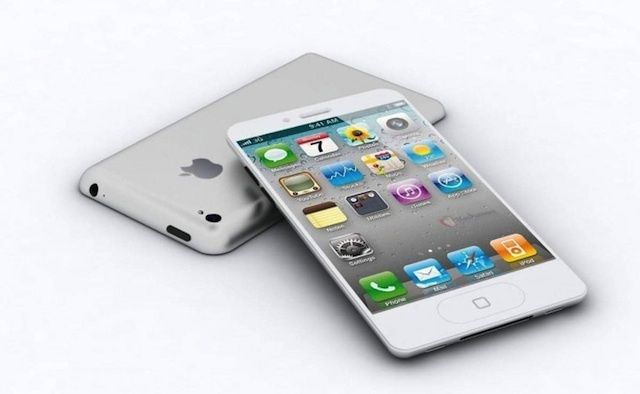


 If there is one thing many are looking forward to with each new iPhone release is what the new model will look like, and there is a reason for this as Apple’s Sir Jony Ive has been known to put out some pretty impressive industrial masterpieces, as evidenced by Apple’s range of products. However over the years we have come to realize that Apple typically keeps design refreshes on a two-year cycle, so the iPhone 6’s design is definitely something to look forward to this year.
 With the iPhone 4, Apple in a way kicked off the race with display resolution, although oddly enough they seem to be lagging behind compared to the Android and Windows Phone competition, where manufacturers have long adopted Full HD as the standard for high-end devices, and in some cases are even trying to introduce QHD displays as the new standard for 2014. In fact last we heard, Samsung could be looking to up the ante with the
  With the
  Touch ID was one of the features that was introduced with the iPhone 5s and basically introduced biometric security to the iPhone. Surprisingly unlike fingerprint sensors of the past, Touch ID turned out to be pretty responsive and useful as we found in our reviews. It is incredibly handy as it can be used to verify purchases in the iTunes App Store as well. Presumably with the investment into the technology, Apple will want to bring it to the iPhone 6 as well, although oddly enough Apple decided to pass on using it in the new Retina iPad mini and the iPad Air. It is unclear if there will be any upgrades or improvements made to Touch ID for the iPhone 6, although as a personal wish, a faster response as well as the ability to use it without having to turn on the screen would be great.
 If there is one thing Apple can be commended on is that they have never really played the megapixel race. Smartphone manufacturers and even camera manufacturers love to advertise megapixels simply because it is a number that people can relate to. Having more megapixels is not a bad thing, but it doesn’t necessarily mean that it is a good thing either and it definitely does not translate into better photographs, as things such as software, lens, image processor, and so on all play a factor in determining photo quality as well.
 The rumors are also claiming that the front-facing 3.2MP camera will be kept, although hopefully Apple will work towards increasing the quality of the front-facing camera to match the rear-facing one. While we doubt the front camera will match the back camera, it could see an increase in quality as rumors are suggesting that Apple could be dropping OminVision in favor of Sony to
  Siri has been improved on an ongoing basis, and we can only assume that it will get better over time. In terms of responsiveness, Google’s own voice search appears to still be more intuitive and more responsive, but perhaps by the time the iPhone 6 rolls around, we might see some drastic changes.


